Where vertical masts make sense
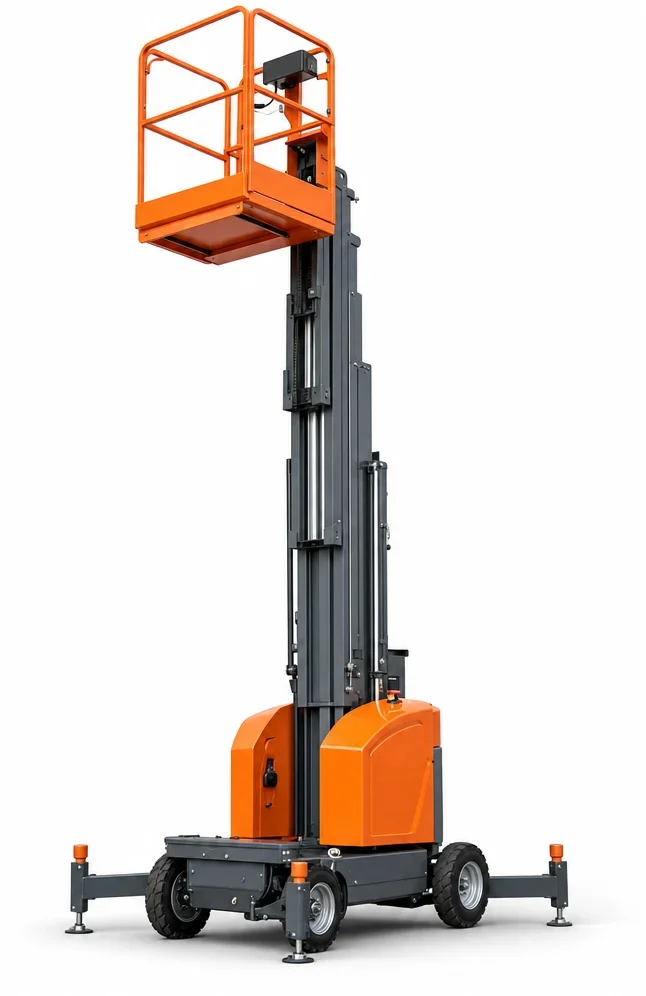
These lifts provide single-person access with a small footprint for tasks like lighting, inventory work, and detail maintenance in aisles or between equipment. When the machine must pass through standard doors, navigate elevators, or work on sensitive floors, a mast lift often replaces a larger scissor.
Local constraints that shape selection
Long indoor maintenance seasons steer many projects to electric, non-marking configurations. In older buildings and specialized labs, floor loading can be a limiting factor, favoring lighter units. Industrial sites with crowded lines and overhead utilities benefit from compact outrigger or stabilized models that position precisely in tight spots.
Outdoor use is limited by ground conditions. Clay-heavy soils and spring thaw reduce stability on unprepared surfaces, keeping most mast work on slabs, docks, or finished interiors.
Dimensions and specs to verify
- Platform height and working envelope: match to fixtures or tasks without exceeding door or ceiling limits along the path.
- Machine width, length, and turning radius: check the narrowest corridor, doorway, and elevator car.
- Weight and floor capacity: compare total machine weight to slab or mezzanine ratings, including any point loads.
- Power and tires: electric with non-marking tires for interior surfaces; confirm allowed charging locations if the route includes controlled areas.
Related categories
- Need more platform space indoors? See /electric-scissor-lift-rental/
- Require outreach around obstacles? Consider /articulating-boom-lift-rental/
Follow the selected unit’s instructions and site procedures for elevated interior work.