Line layout and access
Map runs with gate locations that match how crews, lifts, and suppliers actually move. In redevelopment areas, leave swing room for deliveries and emergency vehicles. Near industrial docks, avoid pinching turning space for /forklift-rental/ and /telehandler-rental/ operations.
Surface and footing
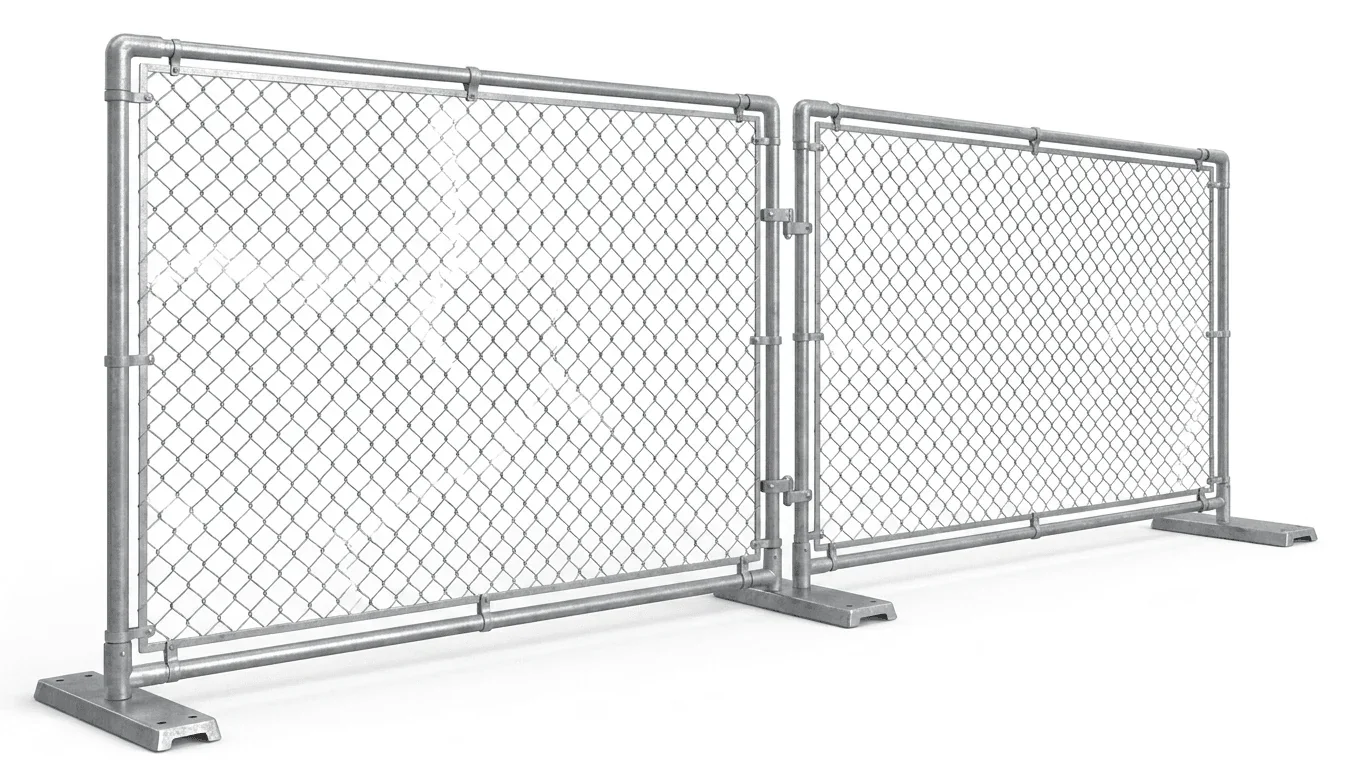
The regional climate and clay-heavy subgrades affect freestanding panels and post-driven systems differently.
- Freeze-thaw: heave can rack panels and loosen posts; plan for periodic checks per site procedures.
- Spring softening: corners and gate posts may need larger bases on lawns or disturbed fills.
Wind and exposure
Open corridors along rivers and railyards funnel gusts that stress screens and privacy fabric. Panel site-stability factors, bracing, and layout should reflect exposure. For tall runs near active aerial work, confirm mast swing paths for /boom-lift-rental/ and /articulating-boom-lift-rental/ so fencing isn’t within tail-swing or tire paths.
Public interface vs. controlled yards
Downtown sidewalks and event spaces call for low-profile barricades with predictable pedestrian flow. Industrial sites often need higher panels, controlled gates, and clear separation from high-bay storage areas. Keep sightlines open where security monitoring is required.
Seasonal logistics
Snow storage can bury bases and push lines out of alignment. Leave set-backs from plow lanes and coordinate with lighting from /generators-light-towers-rental/ so gate checks and night work remain visible. In mud season, avoid long straight runs across saturated soils; break lines at stable pads.
Integration with lift routes
- Interior upgrades: where /electric-scissor-lift-rental/ units operate, define barricade paths wide enough for turns without clipping bases.
- Exterior structure work: rough terrain access from /rough-terrain-scissor-lift-rental/ needs wider gates and firmer approaches.