When an articulating boom solves the geometry
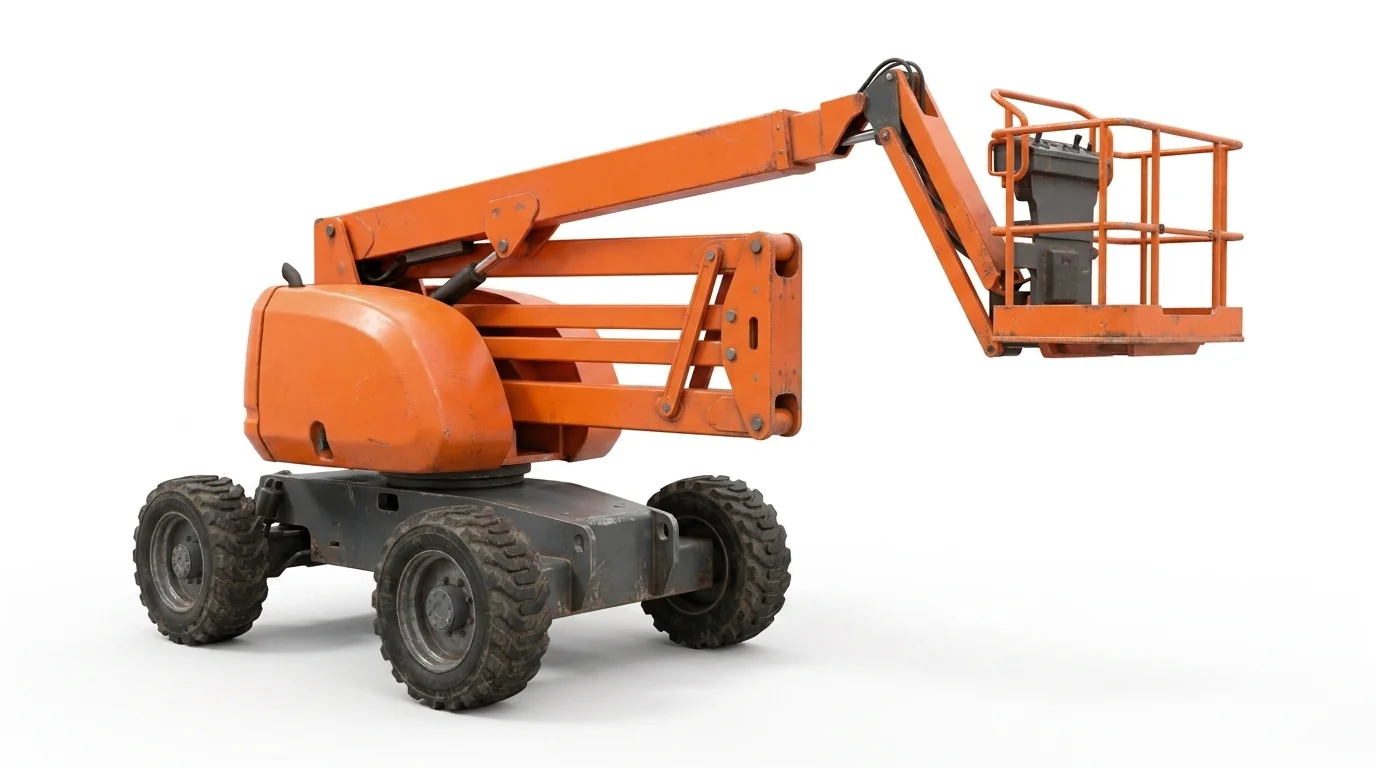
Articulating (knuckle) booms reach up, then over. They’re suited to maintenance above mezzanines, façade repairs set back from the curb, and line changes where floor equipment blocks a straight approach. If the machine cannot sit directly below the work, a boom with multiple joints usually provides the necessary up-and-over envelope.
Key planning points: - Clearance over obstacles: measure height and depth of what you must go over. - Setback from task: note horizontal distance from likely machine position to the work. - Platform positioning needs: check if the job requires frequent lateral repositioning around equipment.
Local site factors in Lansing, MI
The regional climate brings long indoor maintenance seasons, and many industrial sites shift critical work inside during winter. Electric articulating booms suit clean floors and limited ventilation. Spring thaw can soften outdoor surfaces across clay-heavy soils; rough-terrain articulating models with higher ground clearance are often chosen for exterior projects until sites firm up.
Considerations tied to common local jobs: - Industrial retooling: jointed booms navigate over process lines and around utility drops. - State and institutional facilities: outreach is useful for courtyards and set-back façades where slab access is limited. - Logistics buildings: indoor electric units handle high-bay lighting and equipment without exhaust.
Measurements that narrow the model
- Working height and up-and-over clearance: confirm both the maximum height and the highest obstacle you must clear.
- Weight and floor rating: verify slab capacity for indoor units, especially on older floors or mezzanines.
- Power source and tires: electric non-marking for interior slabs; rough-terrain configurations for uneven exterior ground.
- Access route: door widths, turning radii, and elevator limits can rule models in or out before they reach the work area.
Related categories
- For straight-line exterior reach, see /telescopic-boom-lift-rental/
- For indoor vertical work without outreach, see /electric-scissor-lift-rental/
- For broader boom comparisons, visit /boom-lift-rental/
Always match the unit to actual site conditions, the selected model’s instructions, and applicable procedures.